When Your Kid Says "I Hate Reading": Five Things That Helped Us

About six months ago, my six-year-old looked me dead in the face and said "I hate reading."
I won't pretend I took it well. I had a quick internal panic about whether we'd done something wrong, whether he was falling behind, whether the screens we had let him watch were finally collecting interest. Then I did what most of us do — I doubled down. More reading practice. More structured book time. A new sticker chart. He hated all of it. By the end of that week he was avoiding books actively, and I had managed to make a small problem into a much bigger one.
The fix wasn't more practice. It was the opposite. Here are the five things that actually turned this around for our family.
1. Stop Trying to Fix It for a Week
This was the single most important thing, and it was also the hardest.
For one full week, I stopped suggesting reading. No "let's do twenty minutes after dinner." No new books offered. No comments about chapter books his brother was reading. The sticker chart came down. We just lived our life.
What I noticed during that week was that he started picking books up on his own. Not to read them — he'd flip through, look at pictures, ask what a word said, put them back down. The pressure was gone, and his natural curiosity came back almost immediately. The problem hadn't been reading. The problem had been my insistence that reading happen on a schedule.
Reading Rockets has a whole section on reading motivation that says some version of this in academic language. The version that landed for me was simpler: a kid who feels reading is being done to them is going to push back. Removing the pressure isn't quitting. It's repair.
2. Find What They Already Love and Bring Books Into It
My son was — and still is — obsessed with dinosaurs. So week two, I went to the library and got him every dinosaur book they had. Picture-heavy, low text, factually accurate. Some of them were too hard for him to read. That was fine. I wasn't there to drill. I was there to put dinosaurs in front of him and let him handle the books.
He spent an entire afternoon flipping through one of them, asking me what each species was called, asking me to read captions. By the end of the week, he was sounding out "tyrannosaurus" because he wanted to. Two weeks earlier, he wouldn't sound out "cat."
The principle generalizes. If your kid loves trucks, get truck books. If they love a specific TV show, get the tie-in chapter book — yes, even if you find it culturally embarrassing. The only thing that matters is that the topic is something they actively choose to engage with. Reading on top of that is a layer they'll add themselves.
3. Read to Them at a Level Above Where They Read
This one surprised me.
I had been reading easy picture books to him at bedtime, partly because I wanted him to be able to read them himself, partly because I was trying to give him "easy wins." It turns out that was boring him senseless. He wanted to hear stories that were genuinely interesting at his age, even if the words were beyond what he could decode.
So we started reading chapter books at bedtime — Charlotte's Web, The BFG, The Wild Robot — and his attitude toward reading flipped almost overnight. Reading wasn't a chore anymore. It was the thing that brought him interesting characters and big stories. And during the day, when he picked up his own books, he was doing it because he wanted to be the one bringing himself those stories.
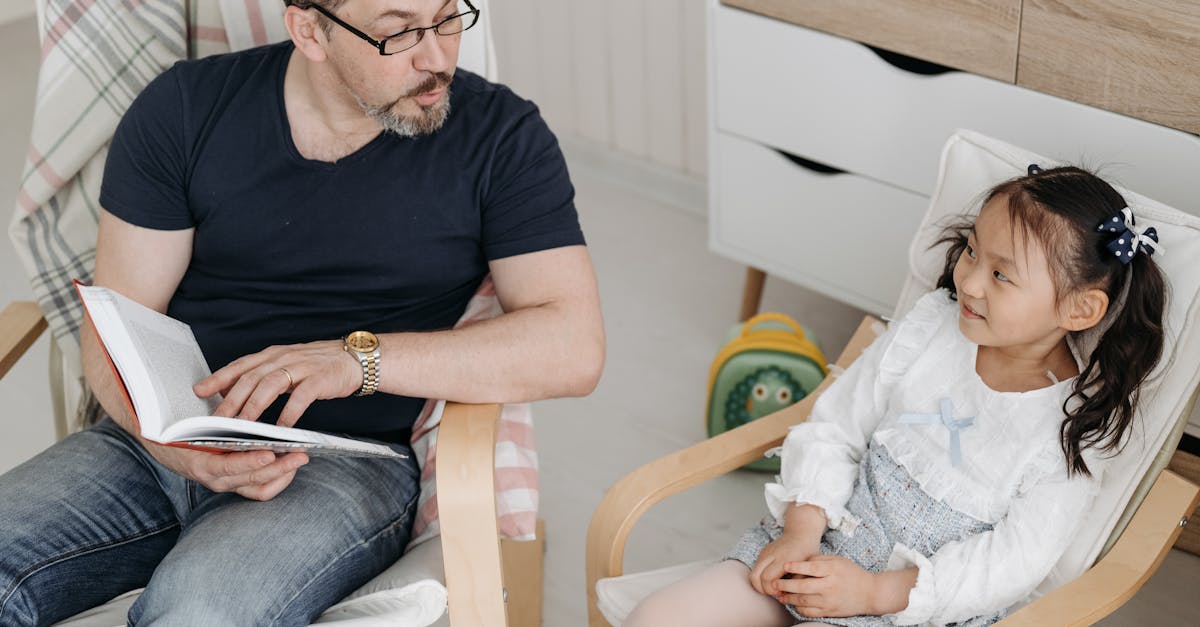 Photo: Pavel Danilyuk / Pexels
This pattern keeps showing up in research and in parent-anecdote alike. Kids whose parents read aloud to them at a level above their independent reading level develop better vocabulary and stronger reading motivation. The decoding catches up. The interest pulls it forward. The National Literacy Trust's 2024 reading survey tracks reading enjoyment alongside frequency and skill, and the link between shared reading and motivation comes through clearly. It lined up with what we were seeing at our own kitchen table.
4. Make the Sessions Short and End on a High
I had been treating reading practice like exercise — push for the duration, build endurance. That works for some things. It does not work for a kid who has decided reading is the enemy.
What worked instead: five-minute sessions. Sometimes three. End while the kid still wants more, not when they're exhausted. The first time we tried this, my son was visibly thrown — he'd been bracing for twenty minutes, and I called it after four. The next day he asked when we were going to read.
There's something specific about how the brain remembers experiences. The way a session ends colors the entire memory of it. A reading session that ends in frustration becomes a frustrating activity. A session that ends with the kid wanting more becomes an activity they look forward to. We covered some of this in our first-session co-play guide, and the same principle applies long after the first session is done.
The hard part is that you have to stop while it's still going well. Every parental instinct says "great, they're engaged, let's keep going." Resist it. End on the high note and you'll have another high note tomorrow.
5. Give Them a Reason to Read That Isn't Reading
The single biggest shift came when I stopped framing reading as the activity and started framing it as the thing that unlocks an activity.
We tried a few versions. Treasure hunts where the clues required reading. Recipe-following so we could make pancakes together (he reads the next step, I do the actual pouring). Map reading on family walks. The reading was the means to something he genuinely wanted to do.
This is also where game-based reading earned its keep with us. There's something specific about a reading game where each word your kid reads opens a door, opens a chest, lets the hero progress — the reading is the mechanic, not a quiz between cartoons. We watched our six-year-old go from refusing reading practice to voluntarily playing fifteen minutes a night because he wanted to know what was on the next door. The science behind why this works is solid, but honestly, watching him decide to read because he wanted to was all the proof I needed.
He's now asking for chapter books. Six months ago he was telling me he hated reading. The kid didn't change. The framing did.
What Didn't Work (For The Record)
A few things I tried that did not move the needle, in case any of these are on your list.
Sticker charts. They turned reading into a transactional thing he was doing for the sticker. When the novelty wore off, his motivation went with it.
 Photo: Gustavo Fring / Pexels
"Just one more page" pressure. Every time I pushed for one more page when he wanted to stop, the next session was harder.
Comparing him to his brother. I wasn't doing this consciously, but I was definitely doing it implicitly. Saying "your brother loves reading at your age" is a thing I will not say again.
Long structured sessions. Twenty minutes was always too long. Even fifteen was usually too long. Three to five minutes, twice a day, beat any single long block we tried.
Buying expensive reading apps before fixing the underlying motivation. Apps don't fix motivation. They can support good motivation, but they can't manufacture it from nothing. Get the motivation right first.
Our broader take on what counts as good screen time covers some of this, but the short version is that no app fixes a kid who has decided reading is the enemy. The relationship has to come first.
When To Worry
Most "I hate reading" phases are about motivation, not ability. But sometimes a kid is hating reading because they're genuinely struggling with it — and pushing them through that without checking is going to make things worse.
The pattern to watch for is consistent, dramatic difficulty that doesn't match the rest of their development. If your kid is reading-resistant and also showing signs of significant decoding trouble, sight word recognition that doesn't seem to stick, or family history of dyslexia, talk to a teacher or pediatrician. There's no downside to a check-in, and early intervention for actual reading difficulties is genuinely effective.
For everything else — the temporary phases, the slumps, the bad weeks — the playbook above is what worked for us, and what most reluctant-reader research lines up with.
When Your Kid Says "I Hate Reading" — Conclusion
It's almost always a phase, and it's almost always about something other than reading itself. Pressure, fatigue, comparison, a curriculum that doesn't fit. The kid hasn't decided they're not a reader. They've decided that whatever was happening around reading wasn't working for them.
Take the pressure off. Find what they love. Read above their level. Keep sessions short. Make reading the door to something else they want. In some order, those five things turned our family around. None of them are dramatic. All of them are slow. Combined, they got our six-year-old back to asking for one more chapter at bedtime, which is all I really wanted in the first place.
If your child needs a reason to read that doesn't feel like reading, our reading game makes the words the gameplay. The Misty Isle is free, and many parents tell us their reluctant readers were the ones who took to it fastest.